How I Work
How I Work
This work is integrative
and led by you.
This work is integrative and led by you.
Some come through the body, some through talking, some through the cards or their chart. Where we start depends on what you came for, and this page is how that works.
Some come through the body, some through talking, some through the cards or their chart.
Where we start depends on what you came for, and this page is how that works.
Prices and lengths are on Ways to Work With Me, what a session
feels like is on The Space, and who’s holding it is on My Story.
What each offering actually is, how long it runs, and what it costs is on Ways to Work With Me.
What a session feels like is on The Space, and to know all about who’s holding the space is on My Story.
The lens I see through...
Underneath everything I do sits one relationship: the one you have with yourself. Your emotions,
your body, your choices, your patterns, all of it
gets filtered through that first. When it changes, everything sitting on top of it moves.
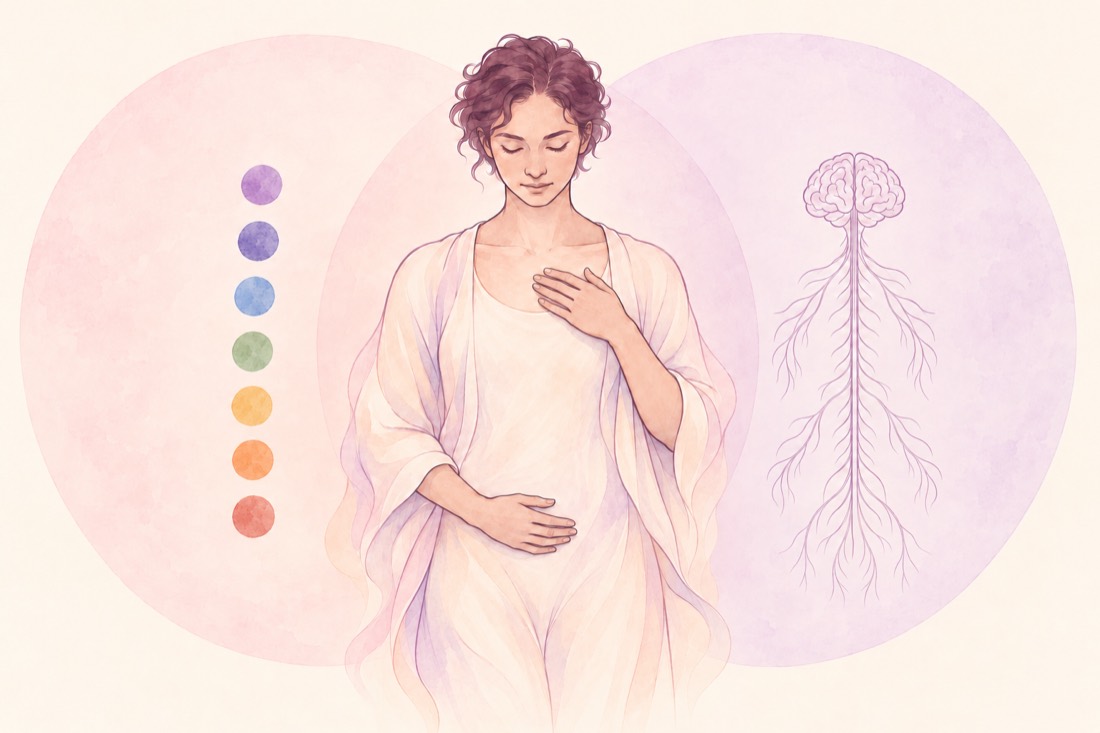
The chakra system is the map I read that relationship through. Not as energy anatomy,
but as psychology. It reads a life from the
ground up: whether you were safe, whether you were allowed to want things, whether saying no
was ever an option, whether love cost you something, and whether it was ever safe to speak. Each one is a place where the relationship with yourself can either go quiet, or go to war.
This map in particular has two vocabularies, and
I won't choose between them. What the chakra system calls the root, nervous system science
calls safety. Those aren’t two findings to me.
That’s one thing told twice, once in symbol and
once in physiology.
Underneath everything I do sits one relationship: the one you have with yourself.
Your emotions, your body, your choices, your patterns, all of it gets filtered through that first.
When it changes, everything sitting on top of it moves.
The chakra system is the map I read that relationship through. Not as energy anatomy,
but as psychology. It reads a life from the ground up: whether you were safe, whether you were allowed to want things, whether saying no was ever an option, whether love cost you something,
and whether it was ever safe to speak. Each one is a place where the relationship with yourself
can go quiet, or go to war.
This map in particular has two vocabularies, and I won't choose between them.
Underneath everything I do sits one relationship: the one you have with yourself.
Your emotions, your body, your choices, your patterns, all of it gets filtered through that first.
When it changes, everything sitting on top of it moves.
The chakra system is the map I read that relationship through. Not as energy anatomy, but as psychology.
It reads a life from the ground up: whether you were safe, whether you were allowed to want things,
What the chakra system calls the root, nervous system science calls safety. Those aren’t two findings to me.
That’s one thing told twice, once in
symbol and once in physiology.
Even so, no map holds a whole person, including this one. Each one only catches a different side of you, so I
use what each of them shows and
keep the focus on you.
whether saying no was ever an option, whether love cost you something, and whether it was ever safe to speak. Each one is a place where the
relationship with yourself can go quiet, or go to war.
This map in particular has two vocabularies,
and I won't choose between them. What the
chakra system calls the root, nervous system science calls safety. Those aren’t two findings
to me. That’s one thing told twice, once in symbol
and once in physiology.
Even so, no map holds a whole person, including this one. Each one only catches a different side
of you, so I use what each of them shows and
keep the focus on you.
Even so, no map holds a whole person, including
this one. Each one only catches a different side
of you, so I use what each of them shows and
keep the focus on you.
Non violence toward yourself is the whole lens
here, and it's why this space is named for ahimsa, the vow of non harm. Most people hear that and think of how they treat other people. But I mean
it pointed the other way. Whatever you've been
at war with inside yourself, this work starts by putting the weapons down, not by winning.
Non violence toward yourself is the whole lens here, and it's why this space is named for ahimsa,
the vow of non harm. Most people hear that and think of how they treat other people.
But I mean it pointed the other way. Whatever you've been at war with inside yourself,
this work starts by putting the weapons down, not by winning.
Non violence toward yourself is the whole lens here, and it's why this space is named for ahimsa, the vow of non harm.
Most people hear that and think of how they treat other people. But I mean it pointed the other way. Whatever you've
been at war with inside yourself, this work starts by putting the weapons down, not by winning.
The tools I work with
There are six of them. Most sessions use two or three rather than all six, and none of them work on their own. What makes them land is how you're met
while you use them.
Open any of them to read more.
There are six of them. Most sessions use two or three rather than all six,
and none of them work on their own. What makes them land is how you're met while you use them. You don't need to know any of them beforehand. I bring what fits and guide it as we go.
Open any of them to read more.
There are six of them. Most sessions use two or three rather than all six, and none of them work on their own.
What makes them land is how you're met while you use them. You don't need to know any of them beforehand. I bring what fits and guide it as we go.
Open any of them to read more.
Therapeutic movement and breath
Some things don't move when you talk about them. You can explain a feeling perfectly and still be carrying it in your shoulders, your jaw, your chest. Your body was holding it before you had words for it, and it usually wants to finish something.
This is where that gets to happen. Gentle stretching, grounding through your feet, shaking tension out of your arms, moving with music, lying on the floor, a fuller breath, a sigh loud enough to actually hear, using your voice, or noticing what your body wants to do when it finally has room to lead.
It isn't about getting a pose right or looking a certain way. The moment it becomes about that, you're watching yourself again instead of being in it. Nobody is assessing you here. I want this to be somewhere you can listen to your own body and be met while you do it.
How we begin depends on how you arrive. Restless or braced, we might start with movement and slow down from there. Heavy or far away, we start in stillness and let movement come to you. We are not in a hurry, and we work with your body, not against it.
If your body is used to bracing, staying busy, or shutting down, rest can feel unfamiliar before it feels good. That is worth knowing in advance, so you don't decide you're doing it wrong. We notice it together and adjust.
I come to this through 550 hours of yoga teacher training and advanced yoga therapeutics training, and through my own recovery. Deep in it, I covered every mirror in my room, put headphones on, and let my body do whatever it wanted. What it wanted was to stomp, to swing my arms, and to sigh out loud. It was the first real relief I had felt in a long time, and it is still the reason I hold this work the way I do.
Movement like this gets measured, not just felt. In randomized trials, body based practices lower cortisol, blood pressure, and resting heart rate compared with other activities, so your body responds whether or not you believe in any of it. But the one thing it does ask of you is to stay curious with yourself, and to give yourself permission to be a person in a room rather than a project to fix.
In person there may also be optional supports, like a warming mat, acupressure mat, or tuning forks, and none of them are ever required for a successful experience. You don't need to be flexible, fit, experienced with yoga, or good at movement to be here. Most people arrive with no idea what their body is going to do, and that is a perfectly good place to start.
Therapeutic movement and breath
Movement that gives your inner world somewhere to go.
Some things don't move when you talk about them. You can explain a feeling perfectly and still be carrying it in your shoulders, your jaw, your chest. Your body was holding it before you had words for it, and it usually wants to finish something.
This is where that gets to happen. Gentle stretching, grounding through your feet, shaking tension out of your arms, moving with music, lying on the floor, a fuller breath, a sigh loud enough to actually hear, using your voice, or noticing what your body wants to do when it finally has room to lead.
It isn't about getting a pose right or looking a certain way. The moment it becomes about that, you're watching yourself again instead of being in it. Nobody is assessing you here. I want this to be somewhere you can listen to your own body and be met while you do it.
How we begin depends on how you arrive. Restless or braced, we might start with movement and slow down from there. Heavy or far away, we start in stillness and let movement come to you. We are not in a hurry, and we work with your body, not against it.
If your body is used to bracing, staying busy, or shutting down, rest can feel unfamiliar before it feels good. That is worth knowing in advance, so you don't decide you're doing it wrong. We notice it together and adjust.
I come to this through 550 hours of yoga teacher training and advanced yoga therapeutics training, and through my own recovery. Deep in it, I covered every mirror in my room, put headphones on, and let my body do whatever it wanted. What it wanted was to stomp, to swing my arms, and to sigh out loud. It was the first real relief I had felt in a long time, and it is still the reason I hold this work the way I do.
Movement like this gets measured, not just felt. In randomized trials, body based practices lower cortisol, blood pressure, and resting heart rate compared with other activities, so your body responds whether or not you believe in any of it. But the one thing it does ask of you is to stay curious with yourself, and to give yourself permission to be a person in a room rather than a project to fix.
In person there may also be optional supports, like a warming mat, acupressure mat, or tuning forks, and none of them are ever required for a successful experience. You don't need to be flexible, fit, experienced with yoga, or good at movement to be here. Most people arrive with no idea what their body is going to do, and that is a perfectly good place to start.
Why this works...
You can know you need a break and still feel guilty the moment you sit down. You can understand exactly where a pattern came from and still tense up when it happens. Understanding matters, and it rarely finishes the job on its own.
Say you finally sit down. Within a minute you're up again, wiping a counter, checking something, finding one more thing that needs doing. And the whole time there's a voice saying you haven't earned this yet.
You can know exactly where that voice came from and still end up off the couch. You can get your body to settle and still hear the voice the next time you sit down. It doesn't live in one place, so it doesn't let go from one place either.
You can know you need a break and still feel guilty the moment you sit down. You can understand exactly where a pattern came from and still tense up when it happens. Understanding matters, and it rarely finishes the job on its own.
Say you finally sit down. Within a minute you're up again, wiping a
counter, checking something, finding one more thing that needs doing. And the whole time there's a voice saying you haven't
earned this yet.
You can know exactly where that voice came from and still end up
off the couch. You can get your body to settle and still hear the
voice the next time you sit down. It doesn't live in one place,
so it doesn't let go from one place either.
There is no right door. Cards, breath, movement, a chart,
a conversation, none of them is the serious one and none
is the soft option. A reading might start with the cards and
the question you bring, and still look at what your nervous system
is doing and what theme sits underneath.
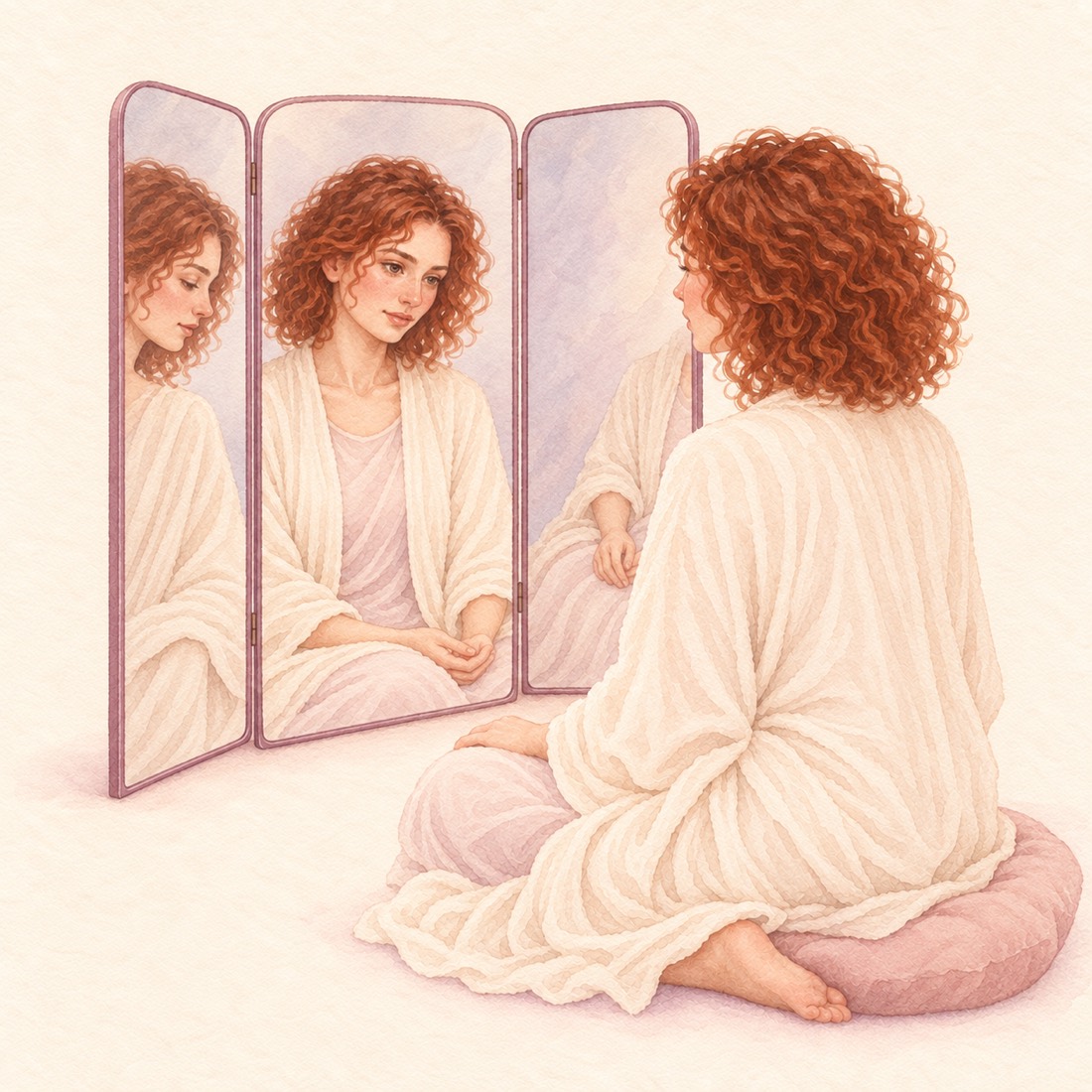
There is no right door. Cards, breath, movement, a chart, a conversation, none of them is the serious one and none is the soft option. A reading might start with the cards and the question you bring, and still look at what your nervous system is doing and what theme sits underneath. A body based session might start with breath and movement, and still ask what that tension is connected to and what it means to you. Whatever you come in through, you get met from the whole of you, not just the part you walked in with. That's what makes this integrative rather than a method I run you through, and I don’t let us merely stop at insight.
Whenever it fits, you leave with something you can carry: a prompt, a practice, an anchor, or a next step small enough to actually keep, so what shifted has somewhere to live in your ordinary days.
I trust this work because it helped me in my own life, and because of what I’ve watched happen with the people I work with. Again and again, the turning point is the moment something that felt confusing becomes specific enough to explore.
A body based session might start with breath and movement, and still ask what that tension is connected to and what it means to you. Whatever you come in through, you get met from the whole of you, not just the part you walked in with.
That's what makes this integrative rather than a method I run you through, and I don’t let us merely stop at insight.
Whenever it fits, you leave with something you can carry: a prompt, a practice, an anchor, or a next step small enough
to actually keep, so what shifted has somewhere to live in your ordinary days.
I trust this work because it helped me in my own life, and because of what I’ve watched happen with the people I work with. Again and again, the turning point is the moment something that felt confusing becomes specific enough to explore.
“I keep getting in my own way”
becomes
“I’m afraid of what will happen if I let myself be seen.”
“I keep getting in my own way”
becomes
“I’m afraid of what will happen if I let myself be seen.”
All of it comes back to how you relate to yourself, and that shapes how you relate to everything else. That’s ahimsa in practice. The aim is a relationship with yourself you can return to, including on the days when you struggle.
All of it comes back to how you relate to yourself, and that shapes how you relate to everything else. That’s ahimsa in practice. The aim is a relationship with yourself you can return to, including on the days when you struggle.
All of it comes back to how you relate to yourself, and that shapes how you relate to everything else. That’s ahimsa in practice.
The aim is a relationship with yourself you can return to, including on the days when you struggle.
Where this work sits
For some this is a bridge into therapy.
For others it runs alongside it, comes after it,
or stands on its own in a season when
clinical care isn't what's needed.
Regardless of how you use it:
For some this is a bridge into therapy. For others it runs alongside it, comes after it,
or stands on its own in a season when clinical care isn't what's needed.
Regardless of how you use it:
I want you to become
your own inner resource,
and eventually not need me.
I want you to become your own inner resource,
and eventually not need me.
But that only works if you stay in charge of how we do this
You are the authority here, and these are
the commitments I hold in every offering.
You are the authority here,
and these are the commitments I hold in every offering.
You are the authority here, and these are the commitments I hold in every offering.
If I offer a breath practice, movement, a card, a prompt, an acupressure mat, or a tuning fork, I'll tell you why I think it could support what's coming up. You can say yes, no, not today, or change your mind halfway through. If you don't want a tool, we can talk, pause, stay with what's already here, or find another way in. None of it is a test of how open you are.
You decide what you share, when you share it, and how much detail feels right. I'll offer reflective questions, but you never have to answer one. You can say you don't want to go there, change direction, answer around something, or stay quiet for a minute. I won't go fishing for the most painful thing that's happened to you, or make you pour out your whole story to prove the work is real. There's a difference between being invited and being pushed, and you'll only get the first one from me.
Life can hold meaning we don't see right away. But spiritual language never excuses harm, lets someone off the hook, or skips past your pain. I won't call grief, anger, fear, or a need to pause resistance just because it slows the work down.
We don't rush to call a loss a blessing, or force a lesson out of something you're still trying to survive. First we let it be real, and make room for what it cost you. If meaning comes later, it comes from your own reflection, not because I assigned one to your pain.
Early on, leaning on someone steadier is normal, and for a lot of people it's necessary. Needing support isn't a failure, and I'm not trying to turn you into someone who never needs anybody.
What matters is the direction. Over time I want the steadiness we build together to feel more and more like yours, so it travels with you into the days I'm not in the room.
If it ever started to feel like you could only find steadiness through me, we'd notice that together, and make sure the work is still leading you back to yourself.
I'll check in during our sessions, but you never have to wait for me to ask. You can pause, get water, cry, breathe, move, sit quietly, or stop.
In body based work we can choose a word or a signal before we begin, so one sound from you stops everything. Some of it will feel uncomfortable, because your system is learning something new, and I watch the difference between a stretch you can stay with and overwhelm that means we slow down. You're the one setting the tempo.
I won't hand you a pretty answer just to keep things comfortable. If I see a pattern, a contradiction, or a door we keep circling around, I'll name it with care. If you're asking why something repeats but you're not ready to touch the part that may be feeding it, I'll be honest about that too.
You never have to agree with me, or go there before you're ready. Tell me I'm wrong. Tell me it doesn't land. This is collaboration, not a verdict I deliver from above. I can hold the torch, but you're the one who knows what's true inside you.
So if anything on this page landed,
the next step is to choose your way in…